Tuesday, February 21, 2023

Everything You Need to Know About Barbells

 Knurling

Much of how a lifter classifies knurling seems to depend on what bars he/she has used and his/her barbell sport background. Perhaps someone who has a powerlifting background and lifted with a specialized powerlifting bar for years can have a different opinion of what aggressive knurling is. The best knurl grade for you will be what you are accustomed to in most instances.

A point of marketing that has surfaced recently is the notion that clean, defined borders of knurling is somewhat indicative of higher quality. The reality of these prominent lines is that this effect can be created in such a way that compromises the steel strength of the barbell.

Knurling is cut into the barbell with a CNC Lathe. Some lathes will require more manual handling than others. The borders of the knurling are created where the machine stops and is restarted again. A fully robotic machine can make exact adjustments during this process, whereas a barbell that is hand-crafted by a man must be reset manually. What some barbell manufacturers will do, (even with some IWF certified bars), is they’ll cut the lines after the knurling is done to create a nice, super neat border. This looks great, and internet bloggers will certainly say this “high quality” feature is a positive attribute of the barbell. The main issue is that any physical cut in to steel is an opportunity to weaken it because it creates stress points. Multiple, unnecessary stress points along the barbell shaft are detrimental to steel strength and the higher the tensile strength of the material, the greater the problem this creates.

Many lifters will like the traditional centre knurling featured on many barbells. Some consider the extra grip they feel on the back of their t-shirt ideal because it makes the bar feel more secure when squatting. The actual purpose of the centre knurling on barbells dates back to when one-armed “odd” lifts were part of competitive weightlifting and even included in the inaugural Olympic games in the late 1800's. The one-armed snatch and the one-armed clean and jerk are only a few examples of lifts that required such knurling. You’ll notice that 15 kg barbells don’t feature a centre knurling because women were not included in weightlifting competitions until well after the one-armed lifts were phased out. For most Olympic weightlifters, the centre knurling will be an annoyance so many higher end weightlifting bars will have a recessed centre knurling for this reason. The IWF specifies the centre knurling is still a requirement for 20 kg barbells, so manufacturers produce their bars to meet this requirement.


Barbell Finishes and Their Properties

Here is a list of many barbell finishes and their pros and cons:

Black Zinc: Looks Great. Wears (down) easily. Often times it is difficult to make black zinc appear to be truly black. Typically you will end up with a somewhat charcoal to chocolate finish or somewhat of a dark olive colour.

Black Oxide: Has a matte black appearance. Black oxide is not so much a coating as it is a chemical process of turning steel black. It has very little anti-corrosive properties which means it will rust quickly if not cared for properly. It will scratch, but it does not flake off. The scratches are just a lighter or a different shade of black so they show more. Black oxide does leave the barbell with a raw steel feel without being purely raw steel.

Bright Zinc: Looks great and classic. It can vary from very shiny, almost chrome-like in appearance to a more matte finish. Exhibits a higher resistance to corrosion than black zinc. Bright Zinc will tarnish and turn grey over time. It is considered a sacrificial coating as it oxides itself rather than the steel underneath it. It will eventually develop a patina which makes each bar have its own unique look depending on its use.

Nickel Chrome: Looks great and classic. Chrome will scratch or chip if mistreated, but it typically lasts a lifetime. All higher end weightlifting bars are nickel chrome or hard chrome plated.

Hard Chrome: Hard chrome is actually an industrial finish. Although it can be polished to high lustre , it will not have the aesthetics of nickel chrome. Hard Chrome has a couple of advantages over Nickel Chrome. It does actually fortify the bar and increases the overall tensile strength. It will easily last 20 years or more. The disadvantage of Hard Chrome is that it can have slight marks in it where the components are suspended by a thin wire during the electroplating. Due to Hard Chrome being so thick, even a small imperfection can be made more noticeable where the material accumulates.

Thin Dense Chrome: It has a matte dark grey appearance that is very unique looking. It has the feel of raw steel without the rust problems of bare steel or some of the other coatings. It adds tensile strength to the barbell just like Hard Chrome does.

Bare/Raw Steel. It looks really great and feels great... for about a week, then it will start to oxidize and rust. If you don't like oiling barbells and meticulously caring for them, or don't mind lifting a rusty bar, a raw piece of steel is ideal for you. With routine oiling, wiping perspiration from the bar after each use, and storing it in a climate controlled environment, the steel will develop a nice bronze/grey coloured patina.


Barbell Rotation Types
Bronze Bushings, Composite Bushings, Needle Bearings

Composite Bushings are made from hard plastic compounds. They are actually harder than bronze and will not break down after extensive use. Over time, the spin of the bar won’t improve (like with the Oilite Bushing), it will remain consistent

Needle bearings provide the smoothest and quickest bar rotation. There are a number of barbell varieties with either 10 or 8 needle bearings being the most common variety. We have found the quality, grade, and fit of the bearings as well of type of lubricant used has more impact on spin than total number of bearings.

Eight (8) bearings can actually take up as much space as Ten (10) bearings, depending on size of the bearings. Bearings are available in different load ratings and widths. Higher load bearings may not spin as easily unloaded and lighter load bearings usually spin much quicker without load, such as spinning with the hand. Once the bar is loaded, there will be no discernible difference in speed of rotation. The higher load rating bearings will last longer and can absorb more impact shock. The reality of weightlifting is that the bar only turns over 180 degrees during a proper lift, and although weightlifting is fast, it's relatively slow as far as revolutions per minute (rpm). Needle bearings are really designed for super high speed applications, meaning thousands of rpm's per minute. Although weightlifting doesn’t push needle bearings to the full capacity of what they are designed to do, utilizing these bearings can still contribute to a successful lift.

Monday, February 13, 2023

How Long Will It Take To Recoup Your Home Gym Investment?

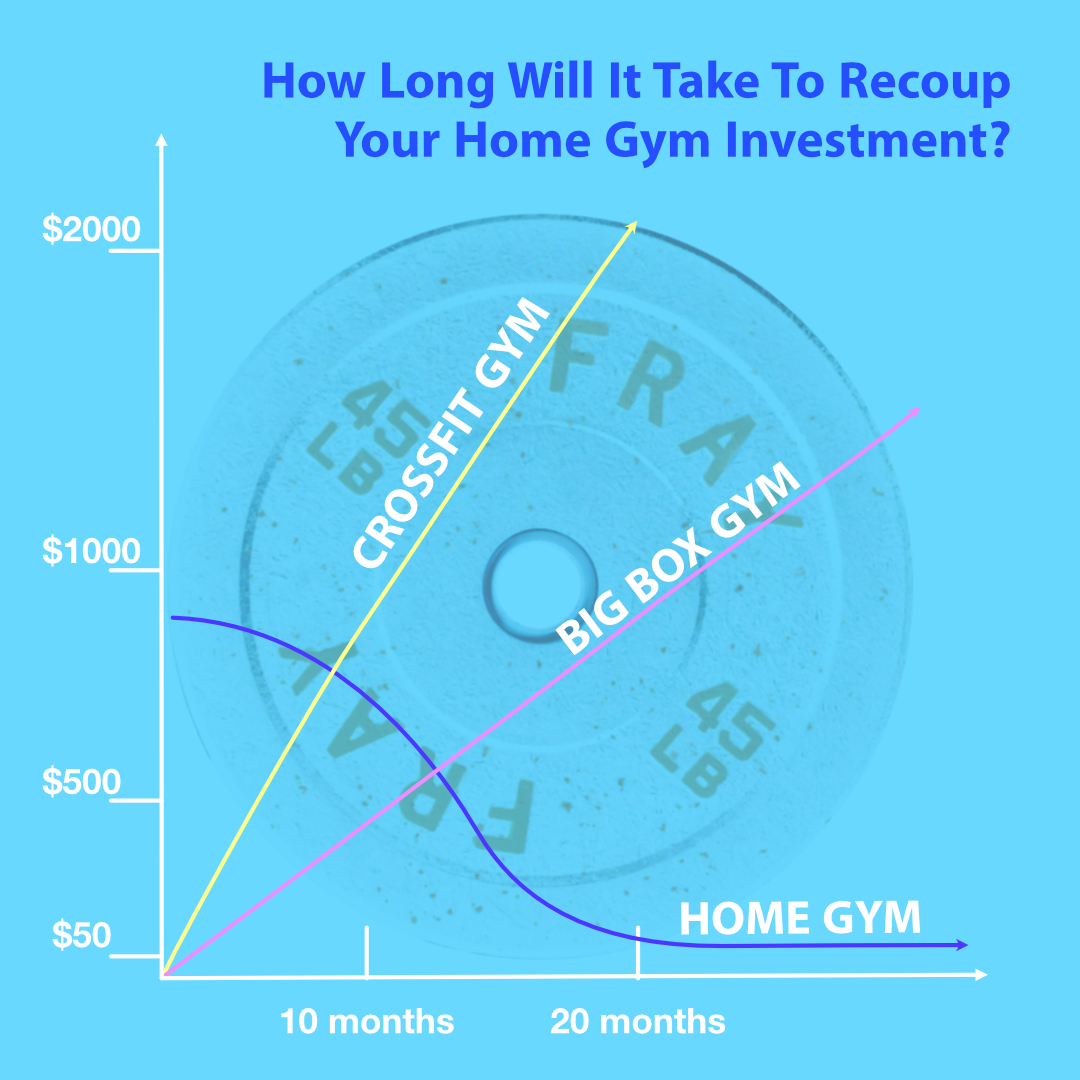
 An idea of a home gym may sound too expensive for you; however, in reality, it’s a great investment. The best part is that you don’t have to wait too long for your return on investment. You can get it as soon as 7 months! Let us break it down, because everyone likes numbers when it comes to savings, right?


If you’re going to a big box gym like Gold’s or similar, the monthly price is around $50 on average! You might get perks like a sauna and swimming pool with that, but how many times you have used the swimming pool? You’re there for a squat rack, weights, and maybe leg press - all of which you often have to wait on. In the meantime, there is an overwhelming amount of people and machines, while you just want to stick to your simple routine. Things that bothered you at your local gym won’t be a problem with a home gym anymore!

On the other hand, if you choose to go to a CrossFit® gym on an unlimited plan, you will spend AT LEAST $150 per month. That is $1800 every year! With your home gym investment of $1,000, you'd make your investment back in less than 7 months. Think about it, you will have everything you need in your garage gym for the price of your membership. You don’t have to be constricted by the class hours, you can have your CrossFit® or cross-training workouts whenever it works best for you. If you were missing motivation, nothing can motivate you more than the convenience of your gym and your new gym toys! Some people like the social aspect of a group training gym, being a part of the team that pushes you, but you can still invite people to your home gym. Moreover, you can now workout with your family.

So, to sum it up, if you spend $1,000 to start your home gym you would make your investment back in less than 7 months if you were going to a CrossFit® gym or 20 months for a big box gym. However, the beauty of a home gym, besides saving a ton of money, is that you get to have your schedule. Whether you are curious about lifting or have been in this game for quite a while, a home gym can be ideal for you! 

Tuesday, January 31, 2023

What's the Deal with Stretching?

 Stretching is an important part of physical therapy, and many physical therapists will include specific stretches into their sessions. Strength and endurance are both undeniably important; however, stretching is a crucial part of anyone’s exercise regimen, whether you are an athlete or someone coping with aches and pains. Stretching helps in increasing flexibility, which can alleviate pain and make other aspects of treatment easier – even strength and endurance!

What does stretching do?


Stretching has a lot of benefits that we don’t always think about. Some of these benefits include:


Improving range of motion.
Range of motion consists of how well your joints can move in all directions. This influences every movement you make! If you have a constricting condition, such as arthritis or an injury, your range of motion can be hindered. Whether it’s turning your head to see behind you while driving, or bending your knee freely while running, range of motion is crucial for both daily life and for fitness pursuits. Stretching can help reduce stiffness and increase flexibility, therefore improving your range of motion.


Finding relief in unexpected places. Sometimes we forget how interconnected our bodies are. It is obvious that if we experience back pain, we should stretch out our backs. However, sometimes stretching your legs during physical therapy can provide unexpected relief to your back, as well. In fact, your hamstrings, upper thighs, and hips can all play a big part in creating lower back pain relief. Likewise, improving your posture through stretching your torso can provide the kind of support you need to keep your spine from compressing, which helps you avoid shoulder and neck pain. Essentially, stretching different parts of your body can provide relief to places you may not have considered!


Enhancing performance.
This point is especially true for athletes. The more you condition your muscles, joints, and ligaments, the greater advantage you’ll have in your sport. For example, bodybuilders recover from their reps much quicker when they stretch as a cool-down. Golfers can achieve a longer reach by increasing their range of motion in their hips and shoulders. Swimmers can even out their strokes by perfecting their balance through stretching. If you are an athlete, stretching can play a crucial role in your performance.


Preventing injuries.   

When muscles are tight or tense, the likelihood of injury increases. This occurs because that particular part of your body isn’t working at its peak performance, even though you might be. When you stretch, you’re loosening up your muscles, in addition to increasing range of motion and improving balance, which all factor into injury prevention. All of these factors can prevent you from making the types of moves that lead to injury, whether it’s coming down too hard on one foot, twisting your back further than you should, or taking a fall due to lack of balance.


Improving circulation.  

Stretching can reduce stress, but that isn’t the only reason it’s good for your heart and your musculoskeletal system. In fact, stretching plays a key role in almost every aspect of your physical abilities. Tight muscles constrict available oxygen supply, essentially robbing themselves of the nutrients they need. Stretches help reverse the process. When you stretch frequently, you’ll also get the benefit of increased blood flow to your joints and throughout the body.

Monday, January 23, 2023

Why Should I Take CBD?

 How CBD Functions in Your Body

When we take CBD, it interacts with a regulatory system within our bodies called the “Endocannabinoid System”. This system is pivotal in regulating all sorts of processes that affect our day-to-day experience from boosting the immune system, regulating everything from mood to blood pressure to even how we experience pain or hunger! While we can’t always control the variables that cause us stress in our bodies, we can use CBD daily to make the most of our endocannabinoid system. Give this amazing regulatory body the best chance to succeed!


“So... What does it feel like?”
We get asked this all the time. Simply put, CBD feels different to everyone because everyone is unique. The day-to-day needs of each person’s body are unique. This is one reason why you’ll see one person swearing by CBD to help them sleep while another is praising it as an anti-inflammatory. Because their individual endocannabinoid systems are working to help them with their own unique issues, they’ll each “feel” CBD in their own way!


Using CBD Daily
In our many years of working with CBD and our customers, we’ve seen a pattern emerge. While folks often come to us with a specific need in the beginning that they want CBD to address, many find themselves eventually taking it each day and become very used to the routine. When the product runs out and that daily routine is no longer happening, people tell us they really get an idea for how CBD was helping them. It might seem subtle at first, but the continual effect of CBD in our lives can really make a difference!


Find the Method that’s Right for You!
We make a wide variety of products to keep up with the wide variety of people that use them. Do you prefer the tried and true method of a dropper-full of CBD oil? Our Full Spectrum Daily line of oils should fit you perfectly. Do you like to take your CBD on the go in your vitamin caddy? Check out both of our lines of softgels! Maybe you would prefer to add CBD to your beverage of choice instead of taking it straight? We formulated our Water-Soluble Rapid Delivery 150 just for you. No matter the person, we can find the CBD product that’s right for you!

Monday, January 9, 2023

What is a Pood?

 This is common question for folks new to kettlebell, especially if you have been getting your workouts from Crossfit. 'Pood' originated in Russia along with kettlebells and is a unit of measurement for kettlebells in Russia. More specifically it is a unit equal to 40 funt (фунт, Russian Pound). A funt is a Russian pound


What is a Pood in Kilograms and Pounds?
It is approximately 16.38 kilograms. A kilogram is 2.2 pounds. So one pood is also 36.11 pounds.

Often times you will see a Crossfit workout call for 1 Pood, 1.5 Pood or 2 Pood. So, the common kettlebell weights closest to this would be a 16 Kg Kettlebell, 24 Kilogram Kettlebell and a 32 Kilogram Kettlebell respectively.


Bye Bye Pood, Hello Pood

Sadly, the good ol' pood was abolished by the USSR as a unit of measurement in 1924.

The term has had some resurgence as kettlebells have become more popular because it is still used in reference to sporting weights in Russia. That is it! Pretty simple!

Thursday, December 22, 2022

Improve Your Overall Health with These 5 Stretching Benefits

 Some people think that stretching is an unnecessary part of exercising. The truth is that stretching is a necessary component of exercise. According to physical therapists, stretching is an important part of one’s daily routine, whether you’re exercising or not.

The 5 Benefits of Stretching

  1. Stretching specific exercises prior to exercising helps the muscles to achieve maximum range of motion. It also helps strengthen the muscles. That is why during physical therapy stretching is a main focus.
  2. Stretching helps reduce muscle tension. It’s a therapeutic treatment by a physical therapist. You’ll feel the rewards of stretching during your daily routine, walking or lifting.
  3. Stretching enhances joint range of motion. It enables the body part to move easier. For more dynamic movement, stretching increases muscular coordination. Some physical therapy sessions focus on a muscle group instead of just one muscle for stretching.
  4. Another benefit of stretching is increased blood circulation. Muscles require sufficient oxygen and nutrients in order to perform well. Stretching ramps up blood flow and transports oxygen and nutrients.
  5. Lastly, a benefit of stretching is heightened energy levels. The increased circulation increases energy levels. Learning to stretch properly will lead you to a more active lifestyle. “According to results of a new systematic review, moderate-grade evidence seems to support strengthening and stretching exercises to help ease chronic neck pain.”

Types of Stretching Exercises in Physical Therapy

Stretching involves stretching connective tissue, a muscle or a tendon. The goal of stretching is to improve range of motion, flexibility and muscle elasticity. The five most common stretching exercises are:
  • Ballistic
  • Dynamic
  • Static
  • Proprioceptive Neuromuscular Facilitation (PNF)
  • Low Load
Ballistic stretch physical therapy is a rapid bouncing motion to stretch a muscle. Dynamic stretching by a physical therapist entails stretching with motion at different speeds and distances. These movements are performed in a controlled and slow manner. Examples include torso swings, arms swings and leg swings. Static stretch physical therapy involved stretching the muscle and holding it for a few seconds. PNF entails holding and controlling techniques to activate specific receptors in muscles. This technique improves muscle length and decreases muscle tension. The low load stretching technique is gradual application of tension to enhance connective tissue remodeling.
A physical therapist will determine the best stretching exercises for your affected area and implement them into your treatment plan. They will also give you home exercises. These stretching exercises may include groin stretches, quadriceps stretches, knee stretches, calf stretches and more. They will also show you how do easy stretches with a towel at home. Knee stretches are very common in all age groups. That’s because knee injuries are common due to overuse or athletic injuries. Activities like running and biking can result in tight quadriceps muscles. Keep in mind that tight muscles can predispose you to injury. If so, quadriceps stretches will be implemented into a treatment plan.

Monday, December 12, 2022

Movement Review Sauna Guide


How To
• 150-175 degrees in a dry sauna
• On average, 15-20 minutes per session
• 3-4 times per week – up to daily
• Optional: Cold contrast shower following


Benefits
• Increases circulation, which is great for organ health and the lymphatic system
• Activates heat shock proteins (linked to longevity through the mechanisms of protein replication,
autophagy and DNA repair)
• Upregulates detoxification mechanisms in the body
• Increases growth hormone
• Increases BDNF (brain derived neurotrophic factor), a significant player in Alzheimer’s prevention
• Decreases stress and improves sleep quality
• Reduces risk of heart attack and stroke by lowering blood pressure
• Improves cardiovascular conditioning by increasing heart rate levels: The High temperatures can
drive heart rates to levels often achieved by moderate-intensity physical exercise.


Recommended Saunas
• Serene Life 1-Person Sauna ($): here
• Clearlight Premier IS-1 (one person far infrared, $$$): here
• Dynamic 2-Person Far Infrared ($$$): here
• Aleko 4-Person Dry Sauna ($$$$): here
• Clearlight Y 4-person With Yoga Space ($$$$): here


Cautions
• If you have experienced a recent heart attack, consult with your healthcare provider before using a
sauna.
• If you have unstable angina (chest pain, narrowing of coronary arteries), consult with your healthcare
provider before using a sauna.
• If you feel dizzy after sauna use, drink some salt water (using 1⁄4 tsp of salt for 8 oz. of water).
Sauna and Longevity
• The idea here is to “stress” the body to produce a hormetic response. A hormetic response is focused
on the concept of “what doesn’t kill you makes you stronger.” A level of adversity stimulates a repair
process that provides cell protection and survival.
• According to the Department of Economic and Social Affairs (from David Sinclair’s book Lifespan), a
study was conducted out of Finland which showed that heavy sauna users (up to 7x/week) showed a
two-fold drop in heart disease, fatal heart attacks, and all-cause mortality over those who used the
sauna only once per week.


To Read:
• https://www.greatplainslaboratory.com/gpl-blog-source/2016/12/12/how-to-maximize-the-benefits-of-
sauna-for-detoxification


Sources:
Sinclair, David. Lifespan. Simon & Shuster, 2019.

https://www.health.harvard.edu/blog/sauna-use-linked-longer-life-fewer-fatal-heart-problems-201502257755